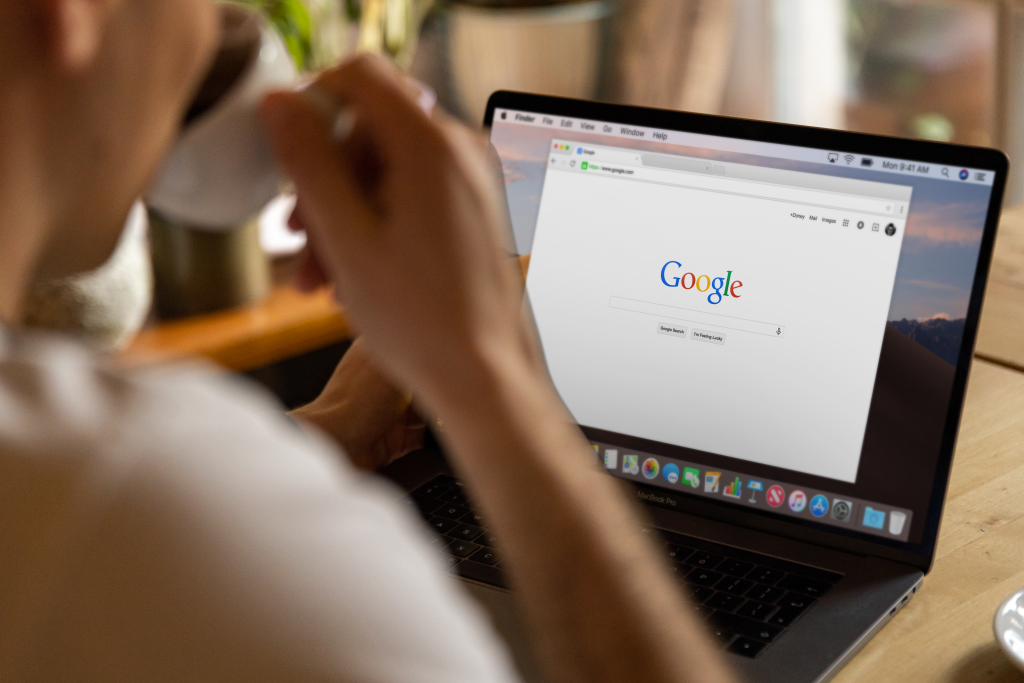
If you want to reach potential customers when they are actively searching for your products or services, Google Ads can be a powerful part of your digital marketing strategy.
But launching an advertisement and hoping for results is not enough.
Successful Google Ads campaigns require the right combination of targeting, keywords, ad messaging, landing pages, conversion tracking, bidding, and ongoing optimization.
Google Ads has also continued to evolve, with automation and AI playing a larger role in campaign management. This makes it more important than ever for advertisers to understand the fundamentals rather than simply relying on automated settings.
In this guide, we’ll explain how businesses can approach Google Ads in 2026 and build campaigns focused on generating meaningful results.
What Is Google Ads?
Google Ads is Google’s online advertising platform that allows businesses to promote their products and services across Google’s advertising ecosystem.
Depending on the campaign type and settings, ads can appear in places such as Google Search, YouTube, Google Maps, and Google’s partner network.
For example, imagine that someone searches:
“digital marketing agency for small business”
A business offering digital marketing services may be able to show an advertisement to that person.
This is one of the biggest advantages of search advertising: you can reach people at a moment when they are already looking for something related to your business.
Why Google Ads Matters for Businesses in 2026
Organic SEO can be an excellent long-term strategy, but it can take time to build visibility.
Google Ads can provide businesses with an additional way to reach potential customers through paid advertising.
Businesses can use Google Ads to:
- Generate leads
- Promote products
- Increase website traffic
- Drive online sales
- Promote local services
- Reach people searching for specific solutions
- Test new offers
- Build awareness
However, paid traffic alone does not guarantee conversions.
The advertisement may get the click, but your landing page, offer, pricing, trust signals, and overall customer experience all influence what happens next.
1. Start With a Clear Campaign Goal
Before creating a campaign, decide what you want the advertising to achieve.
Possible goals include:
Lead generation
Get potential customers to fill out a form, call your business, or request a consultation.
Sales
Drive customers to purchase a product or service.
Website traffic
Bring targeted visitors to a specific page.
Local actions
Encourage people to visit your location or contact a local business.
The campaign structure, bidding strategy, conversion tracking, and landing page should all support the goal you choose.
A simple rule
Don’t start with:
“I want to run Google Ads.”
Start with:
“I want Google Ads to help me achieve this specific business result.”
That difference can completely change how you build the campaign.
2. Understand Your Target Customer
Good advertising starts with understanding the person you want to reach.
Ask:
- Who is my ideal customer?
- What problem are they trying to solve?
- What words would they use when searching?
- Are they ready to buy or still researching?
- What location are they in?
- What makes my offer different?
- What objections might stop them from contacting me?
For example, someone searching:
“how to improve SEO”
may be looking for information.
Someone searching:
“SEO agency near me”
may have stronger commercial intent.
Understanding search intent helps you decide which searches are worth targeting.
3. Choose Keywords Carefully
Keywords connect what people search for with the ads you create.
Google Ads supports different keyword match types, including:
- Broad match
- Phrase match
- Exact match
Each match type gives advertisers different levels of control over which searches can trigger ads.
Rather than selecting hundreds of keywords without a strategy, focus on terms that are closely connected to your products or services.
Example
Suppose you offer website design.
Potential keyword themes might include:
- business website design
- website designer
- website development services
- small business website
- professional website design
You should also consider searches that may be irrelevant to your business.
For example, if you sell website design services but do not provide website-building courses, searches related to “website design course” may not be useful.
This is where negative keywords can help filter out unwanted searches.
4. Write Ads That Match Search Intent
Your advertisement should quickly communicate why someone should consider clicking.
A strong search ad generally connects:
Search → Problem → Solution → Action
For example:
Someone searches:
“website design for small business”
An advertisement could communicate:
Professional Small Business Websites
Create a mobile-friendly website designed around your business goals.
Get a Free Consultation
The message should be relevant to the search rather than making vague promises.
Tips for writing better ads
- Match the language of your target audience.
- Clearly explain your service or product.
- Highlight genuine benefits.
- Use relevant keywords naturally.
- Include a clear call to action.
- Avoid unsupported claims.
- Test different messaging.
5. Your Landing Page Matters as Much as Your Ad
One of the most common mistakes advertisers make is sending every click to the homepage.
A better approach is often to create a landing page that directly matches the advertisement.
For example:
Ad: Google Ads Management for Small Businesses
Landing Page: Google Ads Management Service
The visitor should immediately understand that they arrived at the right place.
A strong landing page can include:
- Clear headline
- Short explanation of the offer
- Key benefits
- Relevant images
- Testimonials or case studies
- Pricing information where appropriate
- Frequently asked questions
- Contact form
- Strong call-to-action
- Trust signals
The journey should feel natural:
Search → Ad → Landing Page → Action
If there is a major disconnect between these stages, your advertising can become less effective.
6. Conversion Tracking Is Essential
One of the biggest differences between simply running advertisements and managing campaigns strategically is knowing what happens after the click.
You need to understand which advertising activity contributes to meaningful actions.
Conversions might include:
- Form submissions
- Phone calls
- Purchases
- Bookings
- Sign-ups
- Quote requests
- Downloads
Google Ads provides conversion measurement tools, and Google Analytics can also be used as part of a broader measurement setup.
Without reliable conversion tracking, you may know how many clicks you received but not whether those clicks produced valuable business outcomes.
Think beyond clicks
A campaign receiving 1,000 clicks is not automatically successful.
If another campaign receives 200 clicks but produces significantly more qualified leads, the second campaign may be more useful to the business.
The important question is:
What happened after the click?
7. AI and Automation Are Changing Google Ads
Automation has become increasingly important in modern Google Ads management.
Google provides automated bidding and AI-powered campaign features designed to help advertisers optimize toward particular goals.
These tools can be useful, but automation does not remove the need for strategy.
Advertisers still need to make important decisions about:
- Business objectives
- Target audience
- Campaign structure
- Offers
- Creative assets
- Landing pages
- Conversion measurement
- Budget
- Geographic targeting
- Data quality
Think of automation as a tool that helps execute a strategy—not as a substitute for having one.
8. Don’t Ignore Your Ad Budget
Your Google Ads budget should be connected to your business economics.
Suppose you spend ₹1,000 per day.
That does not tell you whether your campaign is profitable.
You also need to consider:
- Cost per click
- Conversion rate
- Cost per lead
- Lead quality
- Customer acquisition cost
- Average order value
- Customer lifetime value
- Profit margin
For a lead-generation business, for example, a ₹500 lead may be reasonable if the business regularly turns those leads into profitable customers.
But the same cost may be too high for another business.
There is no universal “correct” Google Ads budget.
Your budget should be evaluated in relation to your business model and results.
9. Test and Optimize Your Campaigns
A campaign should not be considered finished immediately after launch.
Successful advertising requires ongoing learning.
You can analyze:
- Search terms
- Click-through rate
- Conversion rate
- Cost per conversion
- Lead quality
- Geographic performance
- Device performance
- Landing-page performance
- Ad variations
Then use the data to improve the campaign.
For example, you might discover that certain searches generate many clicks but very few qualified leads.
You can investigate those searches and adjust your targeting, keywords, ads, or landing page accordingly.
10. Avoid Common Google Ads Mistakes
Here are some common mistakes businesses should watch for.
Mistake 1: Targeting everyone
Trying to reach everyone can waste budget.
Mistake 2: Sending traffic to an unrelated page
The landing page should match the advertisement and user intent.
Mistake 3: No conversion tracking
Without measurement, optimization becomes much harder.
Mistake 4: Focusing only on clicks
Clicks matter, but business outcomes matter more.
Mistake 5: Using vague ad copy
Tell people clearly what you offer.
Mistake 6: Ignoring search terms
Reviewing actual searches can reveal both opportunities and irrelevant traffic.
Mistake 7: Changing everything at once
If you change multiple variables simultaneously, it can become difficult to understand what caused a performance change.
Google Ads Checklist for Beginners
Before launching your campaign, review this checklist:
Strategy
☐ Define your campaign goal
☐ Identify your target customer
☐ Set a realistic budget
☐ Define what counts as a conversion
Keywords
☐ Research relevant search terms
☐ Understand search intent
☐ Choose appropriate match types
☐ Review negative keywords
Ads
☐ Write relevant headlines
☐ Explain your offer clearly
☐ Include strong calls to action
☐ Test different messages
Landing Page
☐ Match the page to the advertisement
☐ Make the page mobile-friendly
☐ Explain the benefits
☐ Include trust signals
☐ Make the CTA easy to find
Measurement
☐ Set up conversion tracking
☐ Connect relevant analytics tools
☐ Monitor cost per conversion
☐ Review lead quality
Optimization
☐ Review search terms
☐ Analyze conversion data
☐ Test ads and landing pages
☐ Adjust targeting based on results
Final Thoughts
Google Ads can be a valuable tool for businesses that want to reach potential customers through paid search and other Google advertising channels.
But successful advertising isn’t simply about spending more money.
It’s about making better decisions.
A strong campaign connects the right audience with the right message, sends them to a relevant landing page, measures what happens next, and continuously improves based on reliable data.
In 2026, automation and AI can help advertisers manage campaigns more efficiently, but the fundamentals still matter:
Clear Strategy + Relevant Targeting + Strong Ads + Useful Landing Pages + Accurate Tracking + Continuous Optimization
If you are new to Google Ads, start with a clear business objective, learn from your data, and improve your campaigns step by step.
The goal isn’t simply to get more clicks.
The goal is to turn the right clicks into meaningful business results.
Frequently Asked Questions
What is Google Ads?
Google Ads is Google’s online advertising platform that allows businesses to promote products and services across Google’s advertising ecosystem.
How much should a business spend on Google Ads?
There is no single budget that works for every business. Your budget should depend on your market, competition, customer value, conversion rates, and business objectives.
How long does it take for Google Ads to work?
Some campaigns can begin generating clicks and conversions soon after launch, but meaningful optimization generally requires collecting enough data to understand performance.
Is Google Ads better than SEO?
Google Ads and SEO serve different purposes. Google Ads provides paid advertising opportunities, while SEO focuses on earning organic visibility in search results. Many businesses can use both as part of a broader digital marketing strategy.
Why are my Google Ads getting clicks but no customers?
Possible reasons include low-intent traffic, poor keyword targeting, an ineffective offer, a weak landing page, poor conversion tracking, or a mismatch between your advertisement and the customer’s needs.
Should small businesses use Google Ads?
Google Ads can be useful for small businesses when campaigns are carefully targeted, conversion tracking is reliable, and advertising costs are evaluated against actual business results.